
Table of Contents
ToggleBest Hydraulic Filter vs Hydraulic Oil Filter: Top 5 Facts
Written by Neeraj Goel, Founder, Best Air Filter — 10+ years of experience manufacturing HVAC and industrial air filters in Delhi.
Most people search for “hydraulic filter” and “hydraulic oil filter” as if they’re the same product. They’re related, but they don’t do the exact same job. If you run a JCB, a Mahindra tractor, a forklift, or any hydraulic-powered machine, knowing the difference can save you from unplanned downtime and expensive repairs.
In this guide, we’ll cover what each filter does, the top 5 facts that separate them, how to pick the right one, and answers to the questions people search for most: price, HSN code, filter types, and top manufacturers. For custom filtration needs beyond hydraulics, you can also browse our full range of industrial filters.
What is a hydraulic filter?
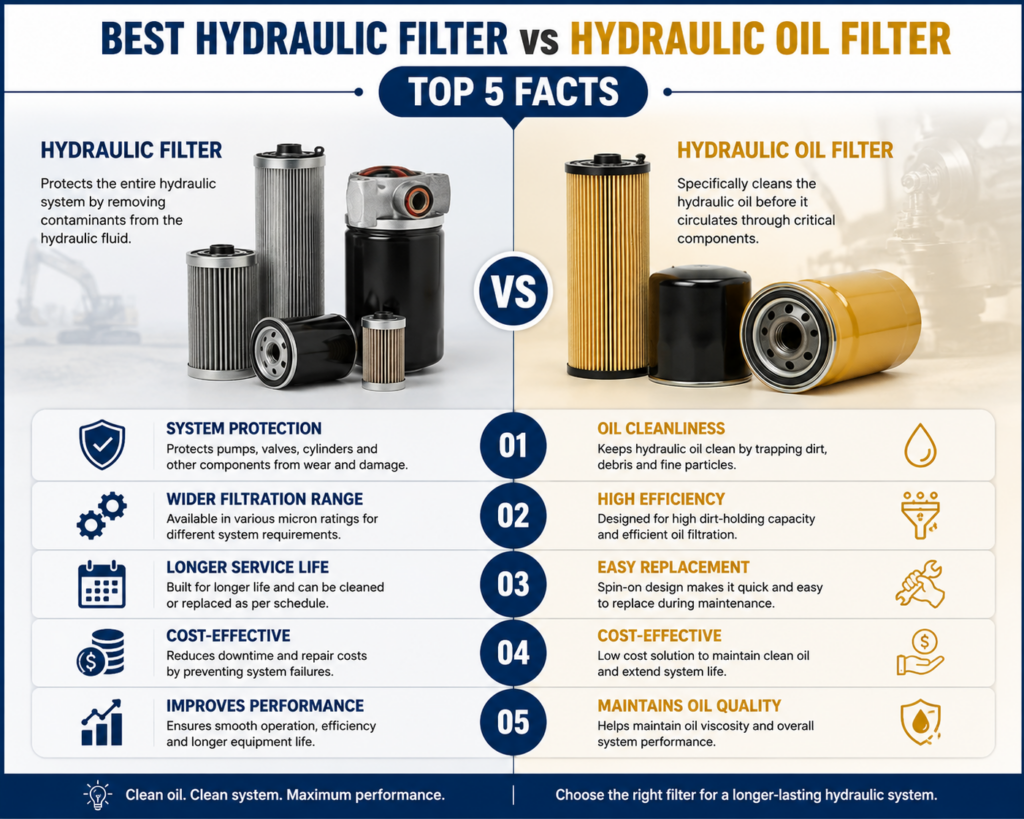
A hydraulic filter is a general term for any filtration component fitted inside a hydraulic system. Its job is simple: remove contaminants like dirt, metal particles, water, and sludge from the hydraulic fluid before that fluid reaches sensitive parts like pumps, valves, and cylinders.
Hydraulic systems run on tight tolerances. A pump or valve can have clearances as small as 5 to 10 microns. A single piece of grit that size, moving through the system at high pressure, can score a valve seat or damage a pump in minutes. That’s why hydraulic filters exist at multiple points in the circuit: suction filters, return line filters, and pressure line filters.
What is a hydraulic oil filter?
A hydraulic oil filter is a specific type of hydraulic filter. It’s designed and rated for cleaning hydraulic oil, not air, not fuel, not coolant. The name gets used loosely in the market, but technically it refers to the filter element that sits directly in the oil flow path, usually inside the reservoir, on the return line, or in an inline housing.
So the relationship is straightforward: every hydraulic oil filter is a hydraulic filter, but not every hydraulic filter is a hydraulic oil filter. Some hydraulic filters, like air breather filters on the tank, filter air entering the reservoir, not the oil itself. If your equipment also needs air-side filtration, our HVAC and industrial air filter range covers that separately.
Hydraulic filter vs hydraulic oil filter: top 5 facts
Fact 1: They target different contamination sources
A hydraulic filter as a category covers multiple contamination points: suction line, pressure line, return line, and case drain. A hydraulic oil filter specifically targets the oil itself, catching particles that build up from wear, seal degradation, and external ingress.
Fact 2: Micron rating decides performance, not the name
The real spec that matters is micron rating, not what the filter is called. A 10-micron hydraulic oil filter removes finer particles than a 25-micron one. For high-precision equipment like CNC hydraulic systems or aviation ground equipment, 3 to 10 micron filters are common. For heavy earthmoving machines like excavators and loaders, 10 to 25 micron filters are standard.
| Application | Typical micron rating |
|---|---|
| Precision hydraulics (CNC, aviation) | 3-10 micron |
| Industrial machinery | 10-15 micron |
| Earthmoving equipment (JCB, excavators) | 10-25 micron |
| Agricultural machinery (Mahindra, tractors) | 15-25 micron |
Fact 3: Filter location changes the design
A suction filter sits before the pump and uses a coarser mesh, usually 60 to 150 microns, because restricting suction flow can cause pump cavitation. A return line hydraulic oil filter, by contrast, can use a much finer element since it’s on the low-pressure side and doesn’t risk starving the pump.
Fact 4: Replacement frequency isn’t the same for both
General hydraulic filters, like breather caps, might last 500 to 1,000 operating hours. Hydraulic oil filters, especially return line elements, are usually checked every 250 hours and replaced based on differential pressure indicators, not just a fixed calendar schedule. Running a machine like a JCB backhoe or Mahindra tractor past the recommended interval increases wear on the pump and directional control valves.
Fact 5: OEM specifications matter more than the generic name
When you search “hydraulic filter JCB” or “hydraulic filter Mahindra,” you’re really looking for a part number matched to that machine’s pump flow rate and system pressure, not a generic filter labeled “hydraulic.” Using a filter with the wrong micron rating or flow capacity, even if it fits physically, can cause pressure drop or inadequate filtration.
How to choose the right hydraulic filter
Picking the correct filter isn’t guesswork if you know 4 things about your system.
1. Match the micron rating to your equipment. Check your machine’s service manual. Most OEMs specify a target ISO cleanliness code (for example, ISO 18/16/13), and the filter micron rating is chosen to hit that target. You can read a detailed breakdown of how these codes work in this ISO 4406 cleanliness code guide.
2. Check flow rate compatibility. A filter rated for 40 liters per minute won’t perform correctly in a system flowing 120 liters per minute. Undersized filters cause pressure drop and bypass, which means dirty oil skips the filter entirely.
3. Confirm the filter location type. Suction, pressure, and return filters are not interchangeable. Installing a fine pressure-line element in a suction position can starve your pump.
4. Buy from a manufacturer with test data. Ask for the filter’s beta ratio (a measure of filtration efficiency) and burst pressure rating, not just a micron number. A reliable hydraulic filter manufacturer will share this data without hesitation.
Hydraulic filter price and HSN code
Pricing varies a lot based on micron rating, filter media (cellulose, synthetic, or wire mesh), and machine compatibility. Basic hydraulic oil filters for tractors and small equipment typically start lower, while high-precision filters for industrial hydraulic systems cost more due to tighter tolerances and synthetic media. For a quote based on your exact specification, contact our team with your machine details.
For GST and billing purposes, hydraulic filters generally fall under HSN code 8421, which covers filtering and purifying machinery for liquids. Always confirm the exact HSN code with your supplier or tax consultant, since sub-classifications can vary based on filter type and material.
Hydraulic filter symbol: what it means on a schematic
On hydraulic circuit diagrams, a filter is represented by a diamond shape with a dashed or solid line through it, sometimes with an arrow indicating flow direction. Reading this symbol correctly helps technicians identify where a filter sits in the circuit (suction, pressure, or return line) without opening the machine.
Frequently asked questions
Is a hydraulic filter the same as a hydraulic oil filter?
Not exactly. Hydraulic filter is the broader category. Hydraulic oil filter refers specifically to the element that cleans the oil, as opposed to air breather filters or other components in the system.
How often should I replace my hydraulic oil filter?
Most manufacturers recommend checking at 250-hour intervals and replacing based on a differential pressure indicator, or at least every 500 to 1,000 hours depending on operating conditions.
What happens if I use the wrong micron rating?
Too fine a rating can cause excessive pressure drop and premature bypass. Too coarse a rating lets contaminants through, accelerating wear on pumps and valves.
Do JCB and Mahindra machines need different filters?
Yes. Flow rate, system pressure, and mounting design differ between brands and even between models. Always match the filter to the exact machine specification, not just the general “hydraulic filter” category.
Where can I buy custom hydraulic filters in India?
Look for manufacturers who offer testing data, custom sizing, and PAN India delivery. This ensures the filter matches your exact system requirements instead of a generic fit. See our product categories for what we currently manufacture, or get in touch to discuss a custom hydraulic filter order.
Final thoughts
A hydraulic filter protects the whole system. A hydraulic oil filter protects the oil that runs through it. Knowing which one you need, and matching it to your machine’s exact specification, is what keeps pumps, valves, and cylinders running without unplanned failures.
If you need a custom hydraulic filter for your equipment, whether it’s a JCB, Mahindra tractor, or industrial hydraulic system, reach out with your machine’s flow rate and pressure specs, and we’ll help you match the right filter. Learn more about our manufacturing background on our About Us page, or check our blog for more filtration guides.