Best Car Air Filter: Complete Buying Guide & Benefits (2026)
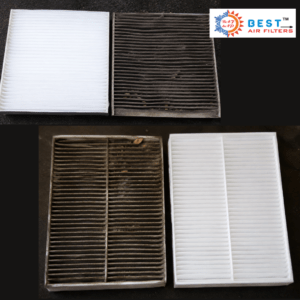
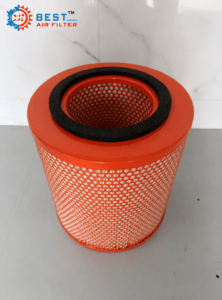
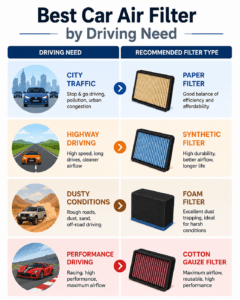
Best Car Air Filter: Complete Buying Guide & Benefits (2026) Most vehicle owners track oil change intervals and tire wear closely, but the air filter often gets skipped in that routine — even though choosing the best car air filter has a direct effect on engine performance, fuel use, and long-term reliability. A car air filter keeps dust, dirt, pollen, and other airborne particles out of the engine. The engine needs a precise air-to-fuel ratio for combustion, and a clogged or low-quality filter throws that balance off, which lowers efficiency and raises maintenance costs over time. This guide covers how a car air filter works, the main types available, how to pick the right one for your vehicle, replacement intervals, and what changes for cars driven on Indian roads. What is a car air filter? A car air filter sits inside the vehicle’s air intake system. Its job is to clean incoming air before it reaches the engine. The filter media traps particles such as dust, sand, pollen, insects, and road debris, while letting clean air pass through to the combustion chamber. Without that layer of protection, these particles wear down pistons, cylinder walls, and other internal components much faster than they should. How a car air filter works Air enters through the filter housing and passes through the filter media. The media catches particles based on their size, then the filtered air moves into the engine and mixes with fuel for combustion. A well-built filter balances two things at once: high filtration efficiency and low resistance to airflow. A filter that blocks too much airflow chokes engine performance, even if it filters well. One that lets too much through protects the filter media’s reputation but not the engine. Why a car air filter matters Better engine performance The engine needs a steady, unrestricted supply of air to combust fuel efficiently. A clean filter keeps that supply steady, which shows up as smoother acceleration and more consistent throttle response. Improved fuel efficiency A clogged filter forces the engine to work harder to pull in the air it needs. Replacing a dirty filter on schedule helps keep fuel consumption closer to what the manufacturer rated the vehicle for, particularly in dusty conditions where filters clog faster. Cleaner airflow Quality filtration keeps abrasive particles out of the intake system. That cleaner airflow reduces internal engine contamination and supports more complete combustion. Longer engine life Unfiltered dust acts as an abrasive. Over time it damages pistons, cylinder walls, valves, turbochargers, and sensors. A filter that does its job consistently reduces this wear and adds years to an engine’s working life. Lower maintenance costs A clean intake system lowers the odds of sensor contamination and air intake faults. A routine filter change costs a fraction of what an engine repair or turbocharger replacement runs to, which makes it one of the cheapest forms of preventive maintenance available. Types of car air filters Different filter materials trade off cost, airflow, and service life differently. The table below gives a quick comparison before the detail. Filter type Material Reusable Best for Paper filter Pleated paper media No Daily drivers, standard passenger cars Foam filter Porous foam Yes, washable Off-road vehicles, dusty environments Cotton gauze filter Oiled cotton layers Yes, with re-oiling Performance-focused vehicles Synthetic filter Synthetic fiber blend No Premium vehicles, demanding conditions Paper air filters Paper filters are the standard OEM choice for most vehicle manufacturers. They are affordable, widely available, and easy to replace, with good filtration efficiency for typical road dust and pollen. The tradeoff is service life. Paper filters are not washable, so they need scheduled replacement rather than cleaning. Foam air filters Foam filters use a porous material with strong dirt-holding capacity. They are washable and reusable, which makes them a common choice for off-road vehicles that see heavy dust exposure. They do need periodic cleaning, and a foam filter that is not maintained on schedule can start to restrict airflow. Cotton gauze air filters Cotton gauze filters use several layers of oiled cotton to combine high airflow with reusability. Performance-focused owners often choose these for the airflow gain, accepting a higher upfront cost and the maintenance work of cleaning and re-oiling. Synthetic air filters Synthetic filters use engineered fiber media built for high filtration efficiency and a long service life. They cost more than paper filters but hold their performance longer, which suits premium vehicles and harsh operating conditions. Quick Comparison Chart: Best Car Air Filter by Driving Need This is the fastest way to match a filter type to how you actually drive: Driving Need Recommended Filter Daily city driving OEM Paper Filter Highway driving Synthetic Filter Dusty areas Foam / Synthetic Filter Performance cars Cotton Gauze Filter If your driving falls across more than one category — say, city commuting most of the week with occasional highway trips — lean toward the option built for the more demanding condition rather than the average one. How to choose the best car air filter Picking a filter takes more than choosing the lowest price on the shelf. Vehicle compatibility. Check the filter against your vehicle’s make, model, engine type, and manufacturing year. A filter that does not seal properly lets contaminants bypass the filtration system entirely. Filtration efficiency. Look for a manufacturer that publishes filtration performance data rather than vague marketing claims. A filter that captures fine particles while keeping airflow steady is doing its job correctly. Airflow performance. The best car air filter for your vehicle balances airflow with filtration rather than maximizing one at the expense of the other. Build quality. Check the filter media, frame strength, and sealing gasket. A weak frame or a poor gasket seal undoes the benefit of good filter media. Manufacturer reputation. Established automotive filtration manufacturers tend to hold tighter quality control standards, which shows up in consistent fitment and performance across batches. OEM specifications. When in doubt, choose a filter that meets or exceeds the OEM specification for your vehicle. That
Best Car Air Filter: Complete Buying Guide & Benefits (2026) Read More »