Best Air Filter

Best Car Air Filter

Best Car Air Filter: Complete Buying Guide & Benefits (2026)

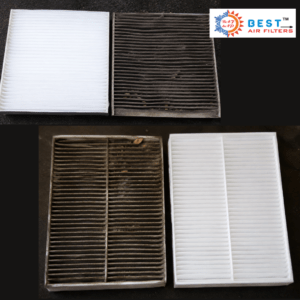
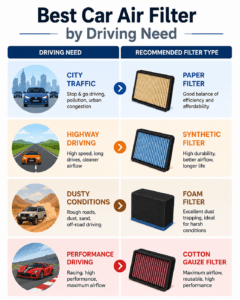
Best Car Air Filter: Complete Buying Guide & Benefits (2026) Most vehicle owners track oil change intervals and tire wear closely, but the air filter often gets skipped in that routine — even though choosing the best car air filter has a direct effect on engine performance, fuel use, and long-term reliability. A car air filter keeps dust, dirt, pollen, and other airborne particles out of the engine. The engine needs a precise air-to-fuel ratio for combustion, and a clogged or low-quality filter throws that balance off, which lowers efficiency and raises maintenance costs over time. This guide covers how a car air filter works, the main types available, how to pick the right one for your vehicle, replacement intervals, and what changes for cars driven on Indian roads. What is a car air filter? A car air filter sits inside the vehicle’s air intake system. Its job is to clean incoming air before it reaches the engine. The filter media traps particles such as dust, sand, pollen, insects, and road debris, while letting clean air pass through to the combustion chamber. Without that layer of protection, these particles wear down pistons, cylinder walls, and other internal components much faster than they should. How a car air filter works Air enters through the filter housing and passes through the filter media. The media catches particles based on their size, then the filtered air moves into the engine and mixes with fuel for combustion. A well-built filter balances two things at once: high filtration efficiency and low resistance to airflow. A filter that blocks too much airflow chokes engine performance, even if it filters well. One that lets too much through protects the filter media’s reputation but not the engine. Why a car air filter matters Better engine performance The engine needs a steady, unrestricted supply of air to combust fuel efficiently. A clean filter keeps that supply steady, which shows up as smoother acceleration and more consistent throttle response. Improved fuel efficiency A clogged filter forces the engine to work harder to pull in the air it needs. Replacing a dirty filter on schedule helps keep fuel consumption closer to what the manufacturer rated the vehicle for, particularly in dusty conditions where filters clog faster. Cleaner airflow Quality filtration keeps abrasive particles out of the intake system. That cleaner airflow reduces internal engine contamination and supports more complete combustion. Longer engine life Unfiltered dust acts as an abrasive. Over time it damages pistons, cylinder walls, valves, turbochargers, and sensors. A filter that does its job consistently reduces this wear and adds years to an engine’s working life. Lower maintenance costs A clean intake system lowers the odds of sensor contamination and air intake faults. A routine filter change costs a fraction of what an engine repair or turbocharger replacement runs to, which makes it one of the cheapest forms of preventive maintenance available. Types of car air filters Different filter materials trade off cost, airflow, and service life differently. The table below gives a quick comparison before the detail. Filter type Material Reusable Best for Paper filter Pleated paper media No Daily drivers, standard passenger cars Foam filter Porous foam Yes, washable Off-road vehicles, dusty environments Cotton gauze filter Oiled cotton layers Yes, with re-oiling Performance-focused vehicles Synthetic filter Synthetic fiber blend No Premium vehicles, demanding conditions Paper air filters Paper filters are the standard OEM choice for most vehicle manufacturers. They are affordable, widely available, and easy to replace, with good filtration efficiency for typical road dust and pollen. The tradeoff is service life. Paper filters are not washable, so they need scheduled replacement rather than cleaning. Foam air filters Foam filters use a porous material with strong dirt-holding capacity. They are washable and reusable, which makes them a common choice for off-road vehicles that see heavy dust exposure. They do need periodic cleaning, and a foam filter that is not maintained on schedule can start to restrict airflow. Cotton gauze air filters Cotton gauze filters use several layers of oiled cotton to combine high airflow with reusability. Performance-focused owners often choose these for the airflow gain, accepting a higher upfront cost and the maintenance work of cleaning and re-oiling. Synthetic air filters Synthetic filters use engineered fiber media built for high filtration efficiency and a long service life. They cost more than paper filters but hold their performance longer, which suits premium vehicles and harsh operating conditions. Quick Comparison Chart: Best Car Air Filter by Driving Need This is the fastest way to match a filter type to how you actually drive: Driving Need Recommended Filter Daily city driving OEM Paper Filter Highway driving Synthetic Filter Dusty areas Foam / Synthetic Filter Performance cars Cotton Gauze Filter If your driving falls across more than one category — say, city commuting most of the week with occasional highway trips — lean toward the option built for the more demanding condition rather than the average one. How to choose the best car air filter Picking a filter takes more than choosing the lowest price on the shelf. Vehicle compatibility. Check the filter against your vehicle’s make, model, engine type, and manufacturing year. A filter that does not seal properly lets contaminants bypass the filtration system entirely. Filtration efficiency. Look for a manufacturer that publishes filtration performance data rather than vague marketing claims. A filter that captures fine particles while keeping airflow steady is doing its job correctly. Airflow performance. The best car air filter for your vehicle balances airflow with filtration rather than maximizing one at the expense of the other. Build quality. Check the filter media, frame strength, and sealing gasket. A weak frame or a poor gasket seal undoes the benefit of good filter media. Manufacturer reputation. Established automotive filtration manufacturers tend to hold tighter quality control standards, which shows up in consistent fitment and performance across batches. OEM specifications. When in doubt, choose a filter that meets or exceeds the OEM specification for your vehicle. That
Best Car Air Filter: Complete Buying Guide & Benefits (2026) Read More »

car oil filter

Car Oil Filter Guide: Improve Engine Performance & Protection

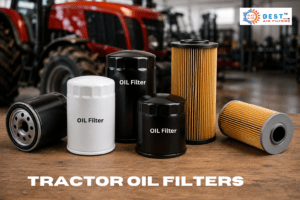
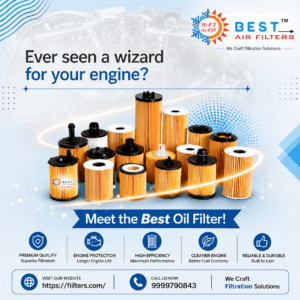
Car Oil Filter Guide: Improve Engine Performance & Protection Your engine runs on oil. That oil picks up metal shavings, dirt, carbon deposits, and combustion byproducts every time you drive. Without a car oil filter, all of that contamination circulates through your engine continuously — wearing down bearings, clogging passages, and shortening engine life. A car oil filter is one of the smallest and least expensive components in your vehicle. It’s also one of the most important. This guide explains how oil filters work, what types are available, how to choose the right one, when to replace it, and what happens if you don’t. What Is a Car Oil Filter? A car oil filter is a mechanical filtration device installed in the engine’s lubrication system. Its job is to remove contaminants from engine oil before that oil circulates through critical engine components. Engine oil lubricates moving parts — pistons, crankshaft bearings, camshafts, valve train components — and reduces friction between metal surfaces. As it does this, it collects particles. Metal wear debris, dirt that enters through the air intake, carbon from combustion, and oxidation byproducts all end up in the oil. The oil filter catches these particles before they cause damage. Without it, contaminated oil acts like a fine abrasive, grinding away engine components with every revolution. How Does a Car Oil Filter Work? The engine oil pump pushes oil from the sump through the oil filter before it reaches engine components. As oil passes through the filter media — typically pleated paper, synthetic fiber, or a combination — particles are trapped and clean oil continues through the system. Most car oil filters also include two additional components: Anti-drainback valve — This rubber valve prevents oil from draining back into the sump when the engine is off. Without it, there’s a brief moment of dry running when you start the engine, because the oil passages are empty and the pump takes a second to build pressure. The anti-drainback valve keeps oil in the filter and passages, so lubrication is immediate on startup. Bypass valve — If the filter becomes severely clogged, oil pressure builds up behind it. The bypass valve opens at a set pressure (typically 10–15 psi) and allows unfiltered oil to flow through rather than starving the engine of lubrication. An engine running on dirty oil is better than an engine running on no oil. These two valves are why filter quality matters. Cheap filters sometimes use low-quality valve materials that fail early or don’t seal properly. Types of Car Oil Filters ocySpin-On Oil Filters The most common type on the road today. A spin-on filter is a self-contained unit — the filter media, housing, anti-drainback valve, and bypass valve are all built into one metal canister that threads directly onto the engine block. They’re easy to replace, widely available, and compatible with most passenger vehicles. The downside is that the entire metal housing is discarded at every oil change, which generates more waste than cartridge-style filters. Cartridge Oil Filters Cartridge filters use a replaceable filter element that fits inside a permanent housing mounted on the engine. You open the housing, remove the old cartridge, install a new one, and reassemble. They’re becoming more common in modern vehicles — especially European brands — because they generate less waste (only the filter element is discarded) and allow easier inspection of the filter condition. The tradeoff is that cartridge housings can develop seal or O-ring issues over time, and replacement is slightly more involved than a spin-on. High-Performance Oil Filters High-performance car oil filters use finer filter media, higher-capacity construction, and stronger bypass valves for engines operating under demanding conditions — track use, towing, extended drain intervals, or turbocharged applications. They typically offer higher particle capture rates (capturing particles down to 15–20 microns versus 25–40 microns for standard filters) and greater dirt-holding capacity before bypass. If your vehicle operates under standard conditions and you change oil regularly, a quality standard filter is adequate. High-performance filters add value in high-stress applications. Extended Life Oil Filters Extended life filters are designed to last longer between changes — typically aligned with synthetic oil drain intervals of 7,500 to 10,000 miles or more. They use higher-capacity media and more durable construction. If you use full synthetic oil and follow extended drain intervals, an extended life filter is the correct match. Using a standard filter with extended-interval synthetic oil means the filter may clog before the oil needs changing. Magnetic Oil Filters Magnetic filters add a magnetic element to capture ferrous metal particles that fiber media can’t always trap. They’re more common in motorcycles and performance applications than everyday passenger cars. Some mechanics add a magnetic drain plug alongside a standard oil filter for similar benefits at low cost. Why the Car Oil Filter Matters for Engine Performance Removes Abrasive Particles Metal wear particles as small as 10–40 microns are invisible to the eye but abrasive enough to accelerate bearing and cylinder wall wear. A functioning oil filter removes these particles continuously, keeping oil cleaner between changes. A study of engine wear patterns consistently shows that vehicles with regular oil and filter changes have significantly lower wear metal concentrations in their oil — directly translating to longer engine life. Maintains Oil Viscosity Contamination thickens oil and changes its viscosity. Thick, contaminated oil doesn’t flow as easily through narrow oil passages, reducing lubrication at critical surfaces. A clean filter keeps contamination levels low and helps oil maintain its designed viscosity grade. Protects Engine Bearings Engine bearings — the components that allow the crankshaft and connecting rods to rotate — depend on a thin film of pressurized oil for protection. Contaminated oil with abrasive particles damages this film and accelerates bearing wear. Bearing failure is one of the most expensive engine repairs. Regular oil filter replacement is one of the lowest-cost ways to protect against this. Supports Efficient Combustion Clean oil reduces internal friction. Lower friction means the engine uses less energy moving its own components
Car Oil Filter Guide: Improve Engine Performance & Protection Read More »

air filter for bike

Air Filter for Bike: 9 Proven Ways to Improve Engine Performance

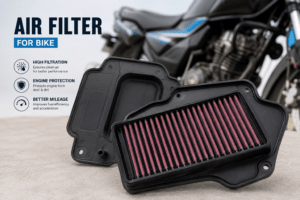
Air Filter for Bike: 9 Proven Ways to Improve Engine Performance Every bike rider knows the basics — change the engine oil, fill quality fuel, keep the tyres inflated. But one component quietly does some of the most important work in your engine, and most riders never think about it until something goes wrong. The air filter. Whether you ride a Hero Splendor in city traffic, a Bajaj Pulsar on highways, or a Royal Enfield on long weekend tours, your engine breathes thousands of litres of air every hour. What happens to that air before it enters the engine directly affects your mileage, your pickup, and how long your engine lasts. This guide covers everything: what a bike air filter actually does, the 9 ways it improves performance, which type suits your riding style, and how to know when it needs replacing. What Is an Air Filter for Bike? A bike air filter sits in the air intake system between the outside environment and your engine’s combustion chamber. Its job is simple: let clean air in, keep dirt out. Every time your engine runs, it pulls in large volumes of air. That air carries dust, sand, pollen, small insects, and microscopic particles — especially if you ride on dirt roads or in dusty Indian cities. Without filtration, these particles enter the engine and slowly damage internal components. The air filter catches all of that. It allows sufficient airflow for efficient combustion while blocking anything harmful. How a Motorcycle Air Filter Works Air enters through the intake, passes through the filter element, and then moves into the carburettor or throttle body where it mixes with fuel. The mixture then goes into the combustion chamber and burns. A clean filter does this process smoothly. A clogged filter restricts airflow — and that restriction affects everything downstream. Why Clean Air Matters for Your Engine Combustion needs three things: fuel, spark, and air. Remove or reduce any one of them, and the engine runs poorly. Your engine’s carburettor or fuel injection system is calibrated for a specific air-fuel ratio. For petrol engines, this is roughly 14.7 parts air to 1 part fuel. When airflow drops because the filter is blocked, more fuel burns relative to available oxygen. The mixture becomes “rich” — fuel doesn’t burn completely, carbon deposits build up, mileage drops, and the exhaust smells darker. This is why a simple filter change can noticeably improve fuel economy on a neglected bike. 9 Proven Ways an Air Filter for Bike Improves Engine Performance 1. Improves Airflow to the Engine A clean filter allows unrestricted air into the intake. More air means better combustion — the engine gets the oxygen it needs at the right quantity and timing. On bikes like the Hero Splendor or Honda Shine, which are tuned for efficiency, a partially blocked filter creates a measurable drop in airflow within just a few thousand kilometres in dusty riding conditions. Replacing a clogged filter restores full airflow immediately. 2. Increases Fuel Efficiency A dirty filter forces the engine to work harder to pull in air. This leads to richer combustion, incomplete fuel burning, and wasted fuel. In real-world terms, riders on commuter bikes often report a drop of 3–5 km/l when the air filter is significantly clogged. A fresh filter brings mileage back to the manufacturer’s specification. For a bike giving 60 km/l, that’s a meaningful difference over a month of daily riding. 3. Enhances Throttle Response and Acceleration When you twist the throttle, you’re asking the engine for more air-fuel mixture. If the filter restricts airflow, the engine can’t respond as quickly. This shows up as sluggish pickup from low speeds — a common complaint from Bajaj Pulsar and Yamaha FZ riders who ride in stop-and-go traffic. The engine feels “heavy” or “lazy.” A clean filter restores sharp throttle response. The engine breathes freely and reacts faster to your input. 4. Protects Internal Engine Components This is the air filter’s primary function — and the most underrated one. Dust particles are abrasive. Even particles too small to see can act like fine sandpaper inside your engine, slowly wearing down: Piston rings Cylinder walls Intake valves Combustion chamber surfaces Once these components wear, the damage is permanent. Repair means reboring the cylinder, replacing rings, or in severe cases, replacing the engine. These repairs cost thousands of rupees — far more than the cost of a new air filter every 10,000–15,000 km. For Royal Enfield riders who take their bikes on long tours through dusty Rajasthan roads or unpaved Himalayan routes, this protection is especially critical. 5. Extends Engine Life Less contamination inside the engine means less wear. Less wear means longer engine life. Bikes maintained with regular air filter replacements consistently show cleaner cylinder bores, better compression, and healthier piston rings when inspected. Bikes where the filter was ignored for 30,000–40,000 km often show visible scoring on cylinder walls. Routine filter maintenance is one of the lowest-cost, highest-impact things you can do for long-term engine health. 6. Reduces Maintenance Costs Replacing an air filter costs between ₹150 and ₹500 for most Indian bikes, depending on the brand and filter type. Cleaning a foam filter costs even less. Compare that to: Carburettor cleaning: ₹500–₹1,500 Piston ring replacement: ₹2,000–₹8,000 Full engine overhaul: ₹10,000–₹30,000+ A neglected filter leads to carbon buildup in the carburettor, fuel system issues, and accelerated engine wear — all of which mean workshop visits and repair bills. Spending ₹200 on a filter every service interval saves significantly over the life of the bike. 7. Improves Overall Riding Experience A properly breathing engine feels different. Throttle inputs feel crisp. Power delivery is smooth. The engine pulls cleanly through the rev range without hesitation or hunting at low speeds. Riders often describe this as the bike feeling “alive” again after a filter change — particularly on older commuter bikes that haven’t been serviced regularly. If your bike has been feeling slightly off without any obvious mechanical reason, a blocked air filter is

Air Filter for Bike: 9 Proven Ways to Improve Engine Performance Read More »