
Table of Contents
ToggleBlower Filter Manufacturer in India
Written by Neeraj Goel, Founder, Best Air Filter. 10+ years of experience manufacturing HVAC and industrial air filters in Delhi.
| Feature | Details |
|---|---|
| Filter media | Paper, polyester, wire mesh, HEPA |
| Efficiency | Up to 99.97% at 0.3 microns |
| Size | Standard and custom |
| Application | Industrial blowers, vacuum pumps, aeration systems |
| Delivery | PAN India |
| MOQ | Custom, based on requirement |
Key takeaway: A blower filter protects an industrial blower’s impeller from dust and keeps airflow steady, so choosing the wrong media, micron rating, or size shortens the blower’s life and raises energy costs. This guide is for plant engineers, procurement staff, and maintenance teams buying or replacing blower filters in India. Use the sections below to pick the right filter type, check current pricing, and confirm your exact specification before ordering.
An industrial blower runs for hours without stopping. It pulls in air, dust, fine particles, and sometimes moisture, and pushes that air through a process line, a vacuum system, or a cooling circuit. Every gram of dust that gets past the intake lands on the impeller. Over weeks, that dust builds a coating that changes the balance of the rotor, raises the load on the motor, and cuts the blower’s output.
A blower filter is the part that stops this from happening. It sits at the air intake and traps dust, dirt, and airborne particles before they enter the blower housing. A good filter protects the impeller, keeps airflow steady, and adds years to the life of the machine. A cheap or wrong-fit filter does the opposite: it either lets particles through or restricts airflow so much that the motor works harder than it should.
At Best Air Filter, we manufacture blower filters for industrial blowers, vacuum pumps, and aeration systems. Our customers run cement plants, textile mills, pharma facilities, food processing units, and wastewater treatment plants. This guide covers what a blower filter does, which type fits which application, how to price one correctly, and how to keep it working once it’s installed.
Here’s the basic airflow path through a filtered blower system:
Air
 ↓ Pre-Filter (wire mesh / panel)
 ↓
Main Filter (paper / polyester / HEPA)
 ↓
Blower
 ↓
Clean Air Output
The pre-filter stops large debris first. The main filter catches finer dust. By the time air reaches the impeller, most of what could cause wear or clogging has already been removed.
What a blower filter actually does
Short answer: a blower filter removes dust and airborne particles from the intake air before it reaches the blower’s impeller, protecting the equipment from wear and keeping airflow at its rated level.
A blower pulls air in through an intake port. Without filtration, that air carries whatever is in the surrounding environment: dust from a cement yard, lint from a textile floor, fine grit from a manufacturing line. The blower filter sits between the open air and the blower chamber, and it removes particles down to a specific size before the air reaches the impeller.
The filter has two jobs. First, it protects the equipment. Dust particles that reach the impeller cause abrasion on the blades and the housing wall. Over time, this abrasion changes the clearance between the rotor and the housing, and the blower loses efficiency. Second, the filter maintains airflow. A blower is rated to move a certain volume of air per minute (CFM, or cubic meters per minute). If the filter clogs, that airflow drops, and the motor draws more current to compensate.
Both of these outcomes cost money. A worn impeller means a repair or a full blower replacement. A clogged filter means higher electricity bills and, in some processes, product quality problems from reduced airflow.
Dust buildup inside industrial equipment is not just an efficiency problem. In some materials, accumulated dust is a recognized fire and explosion hazard, which is one more reason filtration at the intake stage matters. The U.S. Occupational Safety and Health Administration’s guidance on combustible dust covers this in detail for facilities handling dust-generating materials.
Types of blower filters
Blower filters come in different media types. Each one is built for a different dust load and a different operating environment.
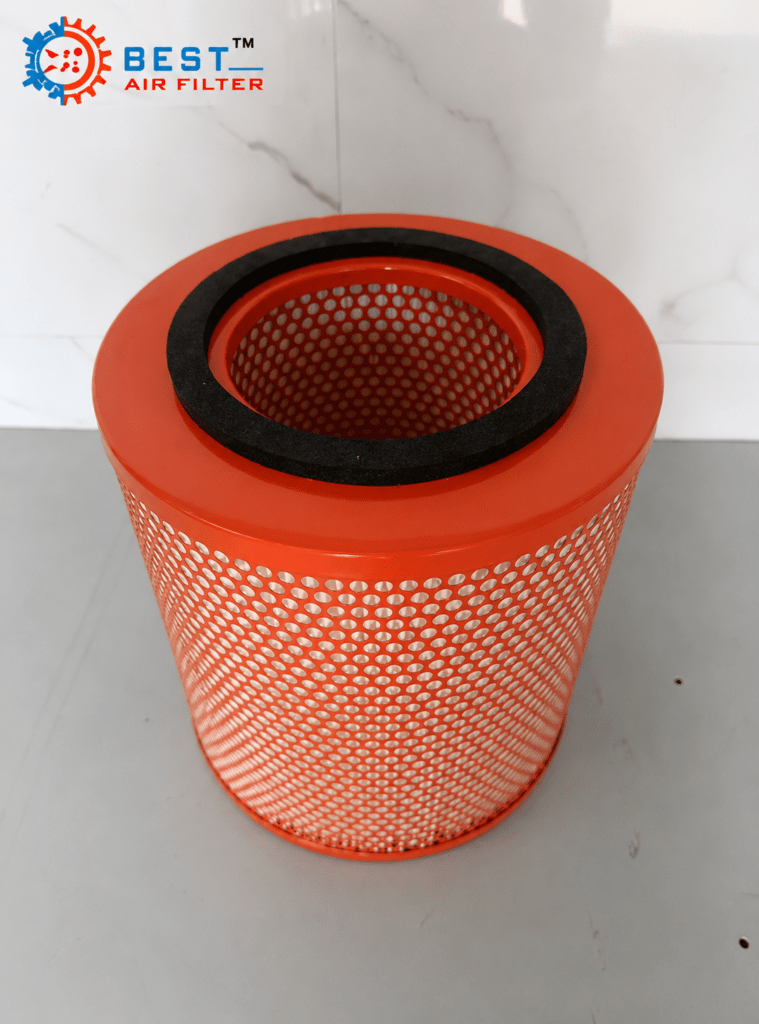
Paper filters. These use pleated paper media, similar to what you’d find in a car’s air filter, but scaled and rated for industrial airflow. Paper filters give high filtration efficiency for a moderate cost, but they can’t be washed and reused. Once they’re loaded with dust, they need replacement.
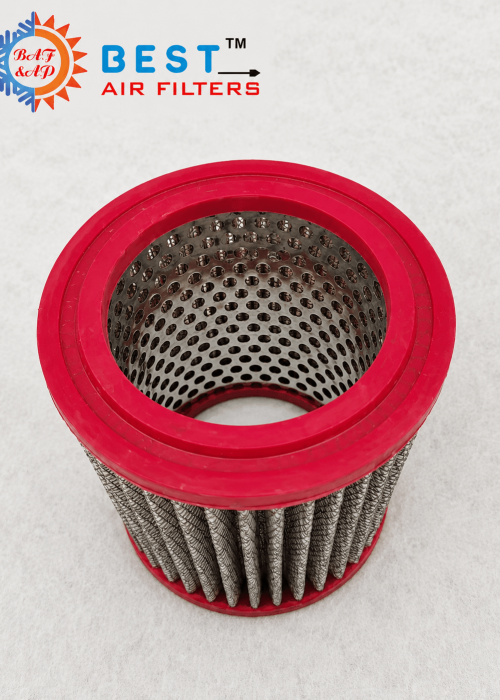
Polyester filters. Polyester media handles moisture better than paper. If your blower operates in a humid environment or near a wash-down area, polyester is the safer choice. Many polyester filters are washable, which lowers the long-term cost per year even though the upfront price is often higher than paper.
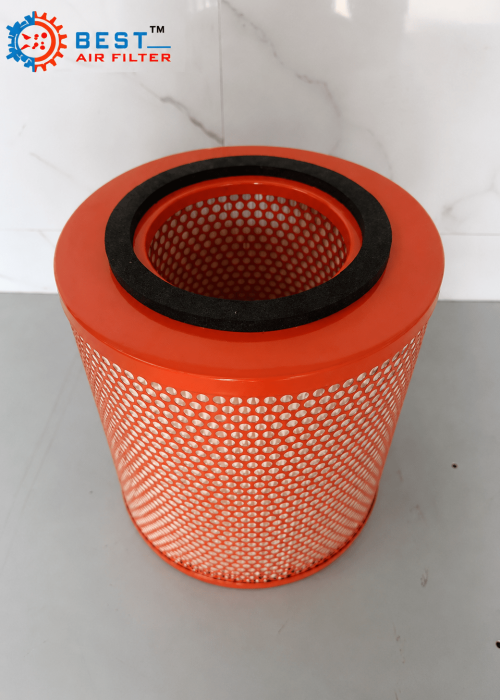
Wire mesh filters. Wire mesh is coarse. It catches large debris: bolts, packaging fragments, big dust clumps. It doesn’t stop fine particles on its own. Wire mesh is almost always used as a pre-filter stage, ahead of a finer paper or polyester element, not as the only filtration stage.
HEPA filters. HEPA (high-efficiency particulate air) filters capture at least 99.97% of particles at 0.3 microns, the efficiency threshold set out in the U.S. EPA’s official definition of HEPA filtration. This level of filtration is needed in pharmaceutical manufacturing, cleanrooms, and any process where airborne contamination affects product safety. HEPA filters cost more and restrict airflow more than paper or polyester, so they’re used only where the application actually requires that level of purity. If you want a deeper look at this filter class, see our guides on HEPA air purifiers and what a HEPA 13 filter is.
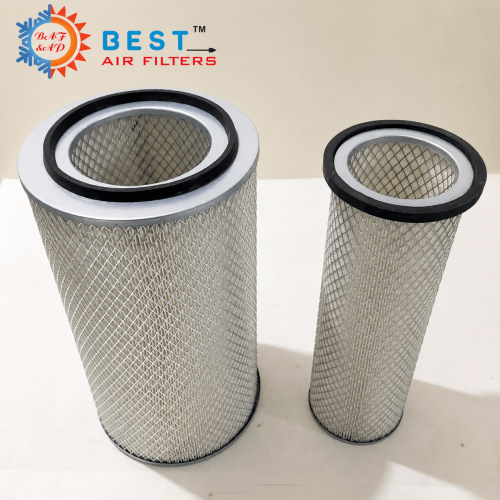
Two-stage filters. A two-stage assembly combines a coarse pre-filter (usually wire mesh or a panel filter) with a finer cartridge behind it. The pre-filter catches large debris and extends the life of the fine filter. In high-dust environments like cement plants, this setup can cut filter replacement frequency by half compared to a single-stage filter, because the fine element isn’t doing all the work alone.
| Filter | Micron rating | Airflow impact | Washable | Typical life | Price range | Best for |
|---|---|---|---|---|---|---|
| Wire mesh | 50+ microns | Minimal restriction | Yes | 6 to 12 months | ₹800 to ₹1,200 | Pre-filter stage, coarse debris |
| Paper (pleated) | 5 to 25 microns | Low to moderate restriction | No | 4 to 8 weeks | ₹1,200 to ₹2,000 | General industrial dust |
| Polyester | 5 to 25 microns | Low restriction | Yes | 2 to 4 months (washed) | ₹1,200 to ₹2,000 | Humid or wash-down environments |
| HEPA | 0.3 microns | Higher restriction | No | 3 to 6 months | ₹2,500+ | Cleanrooms, pharma, sensitive manufacturing |
| Two-stage | 0.3 to 50 microns (combined) | Low restriction, extended life | Pre-filter stage only | 2x single-stage life | ₹2,000 to ₹3,500 | High-dust industrial settings |
Life spans above are typical ranges under moderate dust load. Heavy dust environments (cement, foundry) will shorten these intervals; cleaner environments (HVAC, electronics) can extend them.
How to choose the right blower filter
Short answer: match your filter to your blower’s flow rate, your environment’s dust load, the micron rating your process needs, and your existing housing size. Get any one of these wrong and the filter either restricts airflow or fails to protect the impeller.
Four things determine which filter fits your blower.
1. Blower type and flow rate. Positive displacement blowers, centrifugal blowers, roots blowers, and regenerative blowers all have different housing sizes and rated airflow. Check your blower’s CFM or m³/min rating before choosing a filter, because a filter with too much resistance will cut that rated flow and put extra strain on the motor.
2. Dust load in your environment. A cement plant, a foundry, or a grain handling facility puts far more particulate load on a filter than a pharmaceutical cleanroom. Higher dust loads call for two-stage filtration or larger surface-area cartridges, simply so the filter doesn’t clog within days.
3. Micron rating. Standard industrial dust protection works with a paper or polyester filter rated in the 5 to 25 micron range. Sensitive manufacturing, food-grade air handling, or pharma processes need HEPA-grade filtration at 0.3 microns. Our pharmaceutical filtration page covers cleanroom-grade requirements in more depth.
4. Housing compatibility. The filter element has to physically fit your existing filter housing, or match your OEM blower model’s mounting dimensions. This sounds obvious, but it’s the most common cause of return requests we see: a buyer orders based on filter type alone and the element doesn’t seat correctly in the housing.
If you’re not sure which combination applies to your setup, send us your blower model and operating environment. We’ll confirm the correct spec before you place an order, which avoids the cost of ordering the wrong part twice.
Signs your blower filter needs replacing
A filter rarely fails all at once. It degrades, and the blower shows warning signs before performance drops sharply.
- Falling output pressure. The blower works harder to move the same volume of air, and downstream equipment that depends on that airflow starts to underperform.
- Rising pressure differential across the filter, visible if your system has a filter gauge fitted.
- Unusual noise or vibration coming from the blower housing.
- The motor or housing running noticeably hotter than usual.
- Visible dust caked on the filter element during a routine inspection.
- Higher electricity draw for the same production output, which shows up on your energy bill before it shows up anywhere else.
Ignoring these signs doesn’t just reduce efficiency. If particles start passing through a fully clogged or torn filter, they scratch the rotor and the housing wall. In the worst cases, enough buildup causes the unit to seize completely, and a seized blower usually means a full repair or replacement rather than a simple part swap.
Applications and industries we serve
Blower filters aren’t a one-size-fits-all part. The right spec depends on what equipment you’re running and where.
- Cement plants
- Textile industry
- Pharmaceutical manufacturing
- Food processing
- Wastewater treatment plants
- Vacuum pumps
- Roots blowers
- Aeration systems
If your application isn’t listed here, tell us what you’re running and we’ll confirm whether we can build a matching filter.
Blower filter price in India
Pricing depends on filter media, size, and efficiency rating. These are approximate market ranges for standard sizes:
| Filter type | Price range (per piece) |
|---|---|
| Wire mesh pre-filter | ₹800 to ₹1,200 |
| Paper or polyester cartridge filter | ₹1,200 to ₹2,000 |
| Two-stage filter assembly | ₹2,000 to ₹3,500 |
| HEPA inline filter | ₹2,500 and up, depending on size and efficiency |
Custom sizes, non-standard housings, and higher-efficiency ratings change the price outside these ranges. Since we manufacture directly rather than reselling, we can quote a fixed price against your exact specification instead of a generic “contact us for pricing” range. Tell us your blower model, required size, and quantity, and we’ll send a firm quote.
Installation and maintenance
Inspection schedule. In high-dust environments (cement, foundry, grain handling), check the filter every 2 to 4 weeks. In cleaner environments (pharma, electronics, HVAC), a 6 to 8 week inspection interval is usually enough.
Cleaning vs. replacement. Washable polyester and wire mesh filters can be cleaned with compressed air or a mild wash, then dried fully before reinstalling. Paper and HEPA elements should not be washed. Once they’re loaded, replace them.
Seal check. After every filter change, check the seal between the filter element and the housing. A gap here lets unfiltered air bypass the filter entirely, which defeats the purpose of the filter regardless of how good the media is.
Keep a spare on hand. For blowers running critical production lines, keeping one spare filter element in stock avoids unplanned downtime while you wait for a replacement to arrive.
Log your replacements. Recording replacement dates over a few cycles tells you the real service life of a filter in your specific environment, which is more accurate than any general guideline.
Paper vs polyester vs HEPA: which one do you need
Short answer: paper for general industrial dust on a budget, polyester for humid or wash-down environments, and HEPA only where air purity affects product safety, such as pharma or cleanrooms.
For general industrial dust where cost matters more than reusability, paper filters are the practical choice. For humid, wet, or wash-down environments, polyester holds up better and can be reused, which lowers the cost per year. For pharmaceutical manufacturing, cleanrooms, or any process where air purity affects the final product, HEPA is the only option that meets the required standard.
Most standard industrial blowers do well with a two-stage paper or polyester setup: a coarse pre-filter ahead of a finer cartridge. This combination balances cost, airflow, and service life better than a single-stage filter in most factory conditions.
Why choose Best Air Filter
- We manufacture directly. That means transparent pricing and faster turnaround than working through a distributor or reseller.
- We build custom sizes to match your exact blower model and housing, rather than forcing you into a fixed catalog size.
- We supply pharmaceuticals, HVAC, electronics, manufacturing, and automotive clients across India.
- We deliver PAN India, and our team gives technical guidance before you order, not just after a problem shows up.
- We’ve been manufacturing filtration products for 10 years, based in Delhi, India.
- ISO certified manufacturing process.
- OEM replacement filters built to match your existing equipment specs.
- Bulk order capacity for plants and distributors.
- Fast dispatch on standard sizes, with custom sizes quoted on request.
Frequently asked questions
What is a blower filter?
A blower filter is a filtration component fitted at the air intake of an industrial blower or vacuum pump. It removes dust and airborne particles before they reach the impeller, which protects the equipment from wear and keeps airflow steady.
How often should a blower filter be replaced?
It depends on the dust load. High-dust environments like cement or foundry operations often need replacement every 4 to 8 weeks. Cleaner environments like HVAC or electronics manufacturing can go longer between changes, sometimes 3 months or more, but the only reliable way to know your interval is to inspect the filter and track how fast it loads with dust.
What micron rating do I need for my blower?
General industrial applications work with standard paper or polyester media rated in the 5 to 25 micron range. Pharmaceutical manufacturing, cleanrooms, and other sensitive processes need HEPA-grade filtration at 0.3 microns.
Can I get a custom-sized blower filter?
Yes. We manufacture blower filters to custom dimensions, materials, and efficiency ratings based on your blower model and application.
Do you deliver across India?
Yes. We supply blower filters PAN India, with technical guidance to help you confirm the correct specification before you order.
What happens if I use the wrong filter type?
A filter that’s too restrictive cuts your blower’s rated airflow and forces the motor to work harder, raising energy costs. A filter that’s too coarse lets particles through, which causes wear on the impeller and housing over time. Either mistake shortens the life of the blower.
Need the right blower filter for your equipment?
Send us your blower model, housing size, and operating environment. We’ll confirm the correct filter specification and give you a firm price, without routing you through a distributor first.